


Home / Guides / Repair or replace
Repair or replace? An honest framework for the old doors
The coalfields grid is full of tilt and roller doors that went up generations ago and are still going. Some are worth fixing, some are money after bad, and anyone who tells you the answer without looking at three specific things is guessing. Here are the three things.
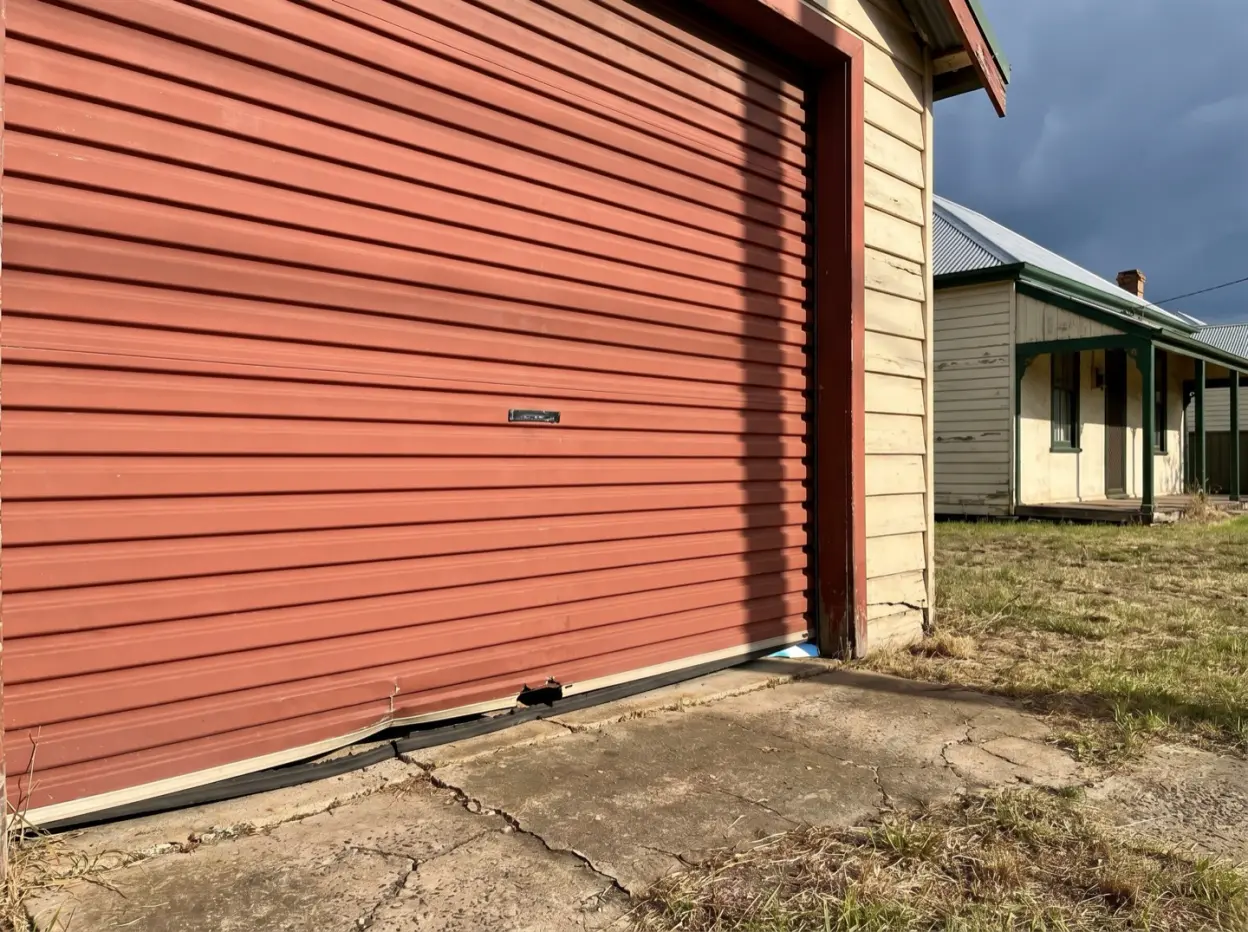
First, the part nobody selling doors likes to say: an old door is not a broken door. A one-piece tilt or a corrugated roller from the mid-century was built simple and heavy, and simple-and-heavy repairs well. Springs, cables, rollers, seals and locks are all replaceable parts. A door only becomes a replace candidate when the things that aren't replaceable parts are gone. So the framework is about finding out which kind of trouble yours is in.
Question one: what actually failed?
Sort the fault into one of two buckets.
- Wear parts: a snapped or tired spring, a frayed cable, seized rollers, a perished bottom seal, a lock that won't catch, a door gone heavy or noisy. These are consumables. On a structurally sound door, replacing them is routine and the door comes back honest.
- The bones: rust that has eaten through the curtain or panel itself (not surface bloom, holes), a bent or cracked frame member, a tilt panel delaminating or sagging under its own weight, corrugations crushed so the curtain can't roll true. These aren't parts; they're the door. When the bones are gone, every repair is a bandage on a structural problem.
A quick driveway test for the bucket: push a screwdriver handle gently against the rusty spot. Surface rust feels solid underneath. Rot flexes, flakes or goes through. And stand inside with the lights off in daytime: pinholes of light through the sheet itself (not under the door, through it) mean the steel is finishing up.
Question two: what is the frame doing?
This is the question that matters most in the grid, and the one most often skipped. These garages are timber-framed, and eighty-odd years of dry summers and storm-wet winters move timber. A door hangs off its frame; if the jambs have leaned or the lintel has sagged, the door's tracks and pivots are being asked to run out of square.
- Frame sound, door worn: the best repair case there is. New wear parts on a square frame and the door runs like it's twenty again.
- Frame moving, door fine: the sneaky one. You can keep re-repairing the door forever and the frame will keep undoing the work. Sometimes the honest fix is carpentry first, door second.
- Frame moving, door gone: the clear replace case, and the moment to fit a door type that suits the opening as it is now, not as it was when it was built.
Driveway test: close the door and look at the gaps. A wedge-shaped gap down one side, or a door that scrapes at one corner and yawns at the other, is the frame talking, not the door.
Question three: what does the door have to guard?
A door protecting a lawnmower and a door protecting the ute, the compressor and every tool you earn with are not the same door, even when they're identical doors. Around here that's not a hypothetical: for a lot of households the garage or shed holds the trade. The more the door guards, the more weight you should give to locking hardware, to how the door fails (a tilt that jams shut at least stays shut; a roller that can be levered is an invitation), and to not nursing a door that's become easy to defeat.
This is also where an upgrade can be the honest recommendation even when a repair is possible: not because the old door can't be fixed, but because what's behind it has outgrown what the old door can promise. We'll say which it is; the call stays yours.

The shapes we see
Three made-up but true-to-life examples, the shapes these calls usually take. They're illustrations, not case studies of real jobs.
An Aberdare tilt, original, dropped with a bang on a weekday morning. Panel solid, frame square, everything else tired but honest. Snapped spring replaced, pivots serviced, seal renewed while we're there. That door will likely outlast the ute in front of it. Replacing it would have been money spent on a problem that cost far less to fix.
A Kearsley roller that "keeps jamming no matter who looks at it." The curtain is fine; the left jamb has leaned in over the years and pinches the guide two-thirds of the way up. Every previous repair treated the door. The honest quote names the carpentry, then the door work, in that order, or the jamming comes back by winter.
A Cessnock garage now holding a fitter's whole trade: rust through the bottom third of the curtain, a lock a screwdriver could open, and daylight through the sheet. It could be patched, again. But every dollar into that curtain is a dollar into steel that's finishing up, guarding gear that deserves better. New roller, proper locking, done.
What this means for your quote
When we look at an old door, the quote answers the three questions in order: what failed and which bucket it's in, what the frame is doing, and what the door has to guard. If it's a repair, we say what the repair buys you and roughly how the door should behave afterwards. If it's a replace, we say exactly why, in terms you can check yourself against this page. And if it's a genuine line-ball, we say that too, with the trade-off spelled out. No invented urgency in either direction.
Sources & further reading
- ACCC Product Safety: garage door openers lists recalls and safety notices worth checking if you're inheriting an unknown opener with the house.
- AS/NZS 60335.2.95 is the Australian safety standard covering powered garage door drives, including the auto-reverse behaviour a healthy opener must have. We describe it here so you know it exists; compliance claims for a specific product belong to its maker.
Want the call made on your door?
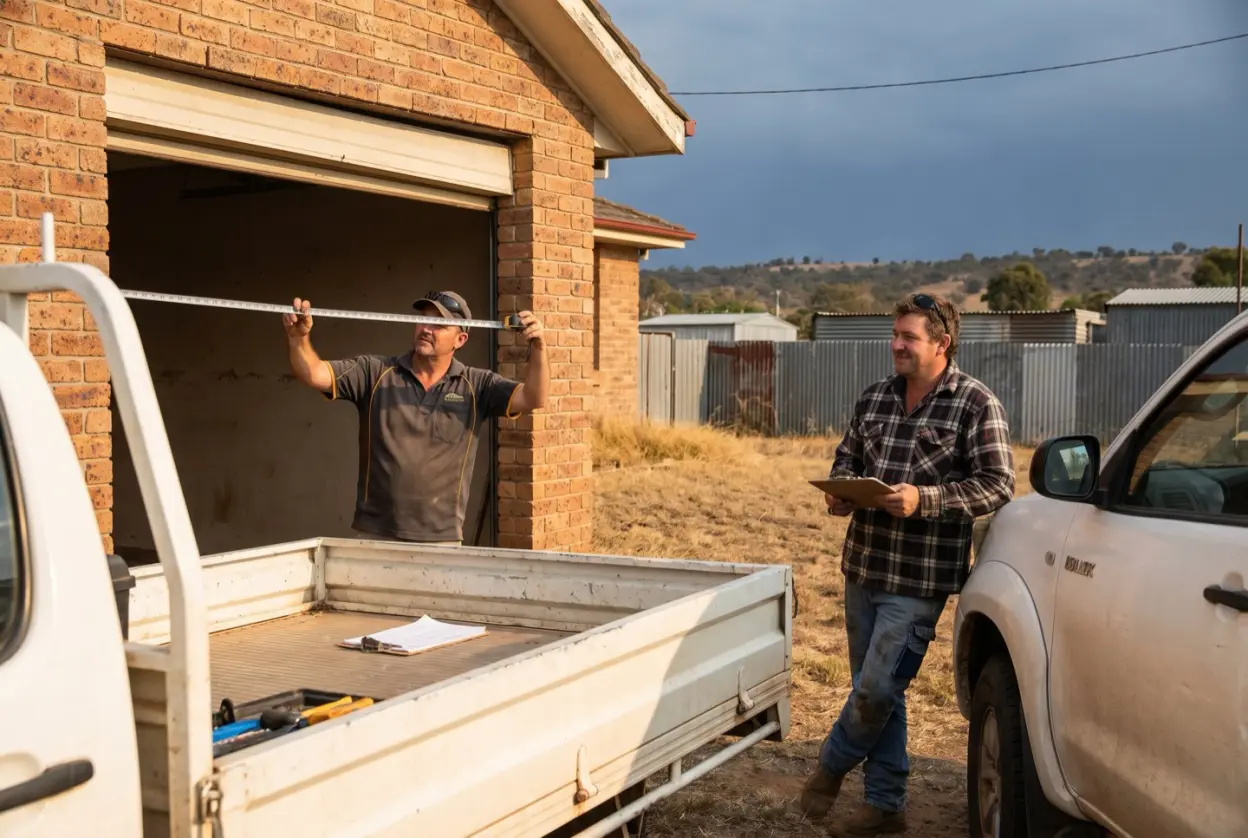
Tell us the suburb, the door type and its age if you know it, and what it's doing. We'll come, look at the three things above, and tell you which side of the line it sits on.
No call centre, no run-around
Tell us about the door
A few lines on the form reach a person who knows doors, not a queue. If it is urgent, say so in the message and lead with your phone number.